Hold on to your socks, this could get crazy
Be yourself; Everyone else is already taken.
— Oscar Wilde.
For my physics class this semester we had a little project assignment given to us to do. I hope you enjoy it as much as I did if not more! Here we go!
Part 1: Star Identification:
Message 1 from the Universe: You are small.
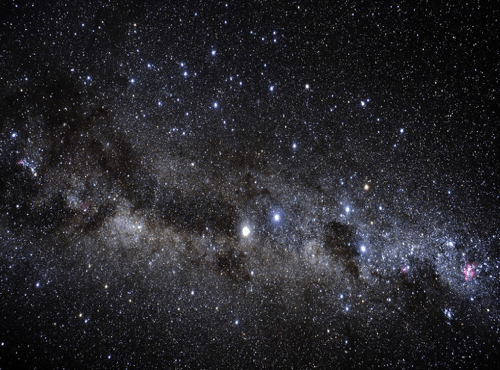

This beautiful picture above is of the Southern Cross (a little difficult to see as there are a lot of stars in this picture. The southern cross is just to the right of the two brightest stars in the picture). I have never seen it before in person, because it is located in an area where it is only visible to the southern hemisphere of the world. So Australians get to enjoy the view. Which makes sense as to why they put the southern cross on their flag. No matter where it is located in the sky, it is still beautiful and fascinating to learn about. We won’t go into too much depth about the entire constellation, but there are are four particular stars that I will share some fun facts about: Alpha Centauri, jBeta Centauri, Alpha Crucis, and Beta Crucis. First of all, let’s take a look at where all of them are.
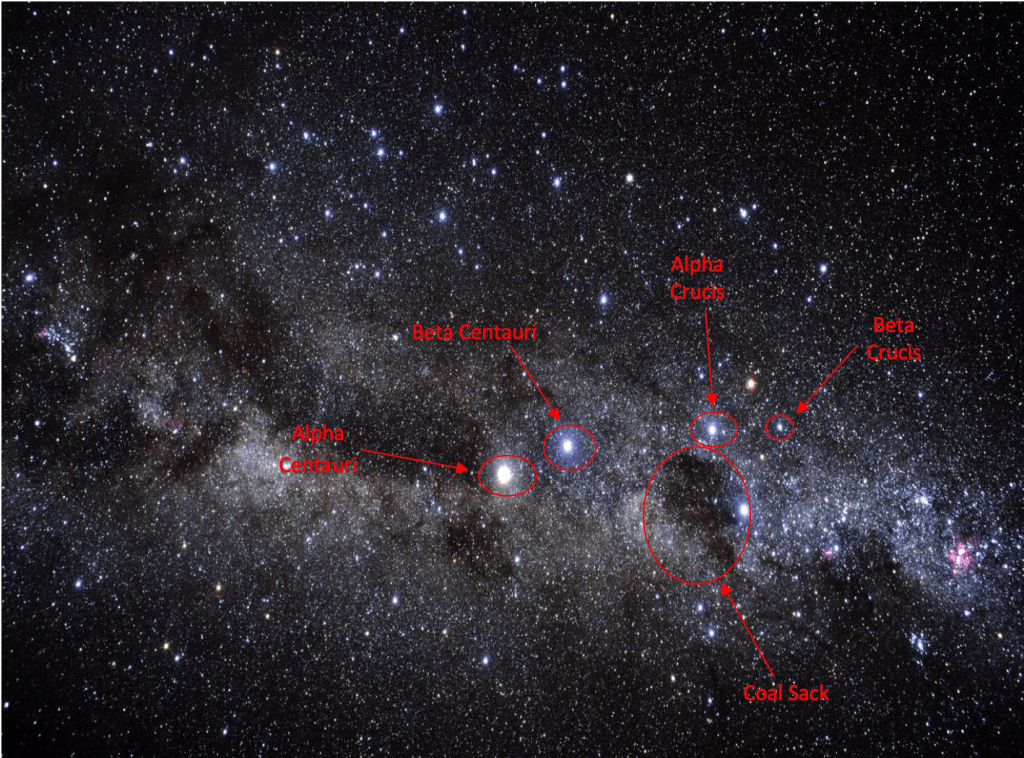
These are the four stars we will be focusing on. The Coal Sack is just a little fun fact I wanted to add in. The Coal Sack is a galactic dust cloud that blocks a lot of stars that are further away. Okay! I know you are excited, so let’s learn about these stars!
First of all, how far away are they? I will be using lightyears to help show the distance. A light year is how far (in miles) an object travels in a year, traveling at the speed of light (299,792,458 m/s), which is 5.879e+12 miles. That’s pretty far.
Alpha Centauri – 4.367 light years (a little over 4 years of traveling at the speed of light)
Beta Centauri – 391.4 light years (almost 400 years of traveling at the speed of light)
Alpha Crucis – 322.9 light years (a little closer than Beta Centauri, but not by much)
Beta Crucis – 277.2 light years (almost 300 years of traveling at the speed of light)
We are going to go even farther now. Not only are they that far away, but it takes that many years for the from those stars to reach us. So if we were to be standing in Australia right now, gazing up at the night sky, what year did the light from those stars leave to be able to reach our eyes at this moment? Well, I will tell you:
Alpha Centauri – 2015
Beta Centauri – 1628
Alpha Crucis – 1696
Beta Crucis – 1742
That is old light! Can you imagine? If Beta Centauri were to collapse, and cause this massive light explosion in the sky right this very second, we wouldn’t see it until the year 2410!
These stars have to be pretty big to give off so much light, even though they are so far away. So let’s compare them to our local star, the sun. Just as a reference point, the radius of the sun is about 432,170 miles, and it’s luminosity is 1L or, 3.828e+26W where W=Watt. Pretty big and bright. I won’t get into too much detail with numbers and such, but in general, let’s see how these stars compare:
Alpha Centauri – 25% bigger than the sun and 1.6 time brighter
Beta Centauri – 15 times bigger and 55,000 times brighter
Alpha Crucis – 7.8 times bigger and 25,000 times brighter
Beta Crucis – 8.4 times bigger and 16 times brighter
If that doesn’t make you feel small, I don’t know what will. There are big stars out there. That’s for sure. Stay tuned because later I will discuss the possibility that big stars are not the only thing out there….
Part 2: Equation Analysis
Message 2 from the universe: People, like physics equations, can seem intimidating upfront. But once you get to know them, they end up being pretty useful and very interesting.
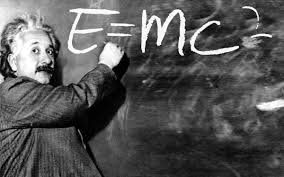
Okay so we all know that part of physics is the equations that we have to try and help us understand more of how the universe works. I have three equations that I will analyze. Let’s see if we learn something about the unseen forces…
Equation 1: E = mc2
The famous equation proposed by the one and only Albert Einstein. But, what do the letters mean? Don’t worry, I’ll tell you.
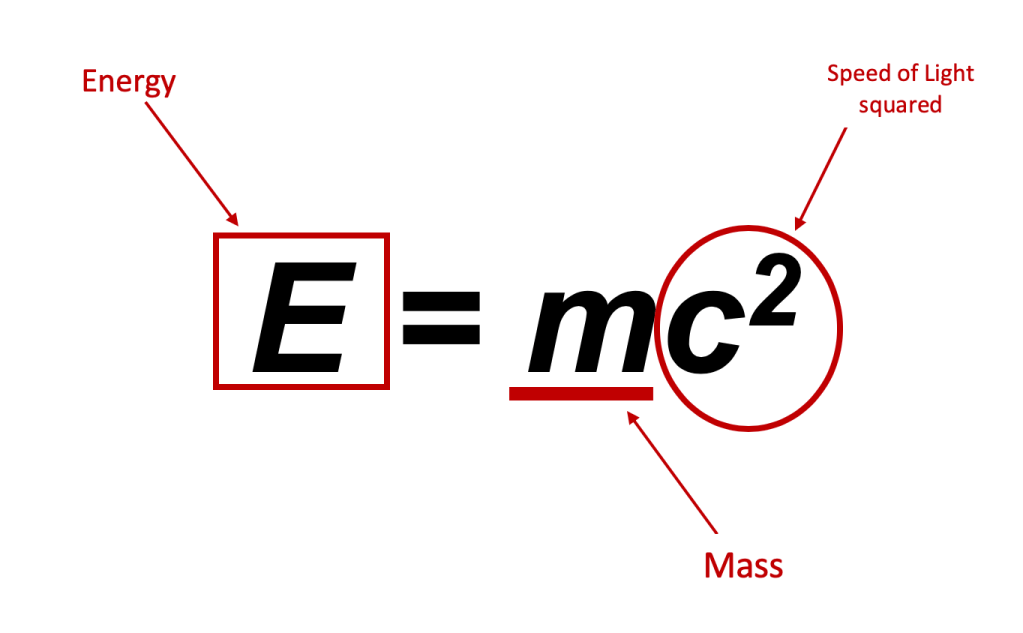
Pretty simple, right? There is only one constant in this equation, which is c. We talked about the speed of light earlier when discussing the distance of the light traveling from the stars to our eyeballs. It was a pretty big number. So then what is the actual value of c2? It is the speed of light (299,792,458 m/s) multiplied by itself bringing it to a grad totalf 8.99e+16. Wow thats big.
Are mass and energy related? They are involved in the same equation, yes, but are they related? Turns out, yes! They are! As the equation shows, energy in an object is equal to its mass, multiplied by the speed of light squared making it so that energy can be converted to mass and transversely, mass can be converted to energy.
That being said, have you ever heard the statement “If it is possible to change mass into energy, a little bit of mass could produce a lot of energy”? based on the equation above, could this statement be true? You would think no, but it’s important to remember that energy and mass are not equal to each other, only related. Remember that c2 is a huge quantity. So, small amount of mass (m), coupled with the speed of light squared equals a ton of energy! The only problem here is that it takes a lot of energy to turn mass into energy, so that is why we don’t do it on a regular bases. Imagine how cheep gas would be if we could!
Equation 2: d = gt2/2
…where:
d = distance an object falls when released from rest (no air resistance)
g = acceleration of gravity at the Earth’s surface
t = time the object has been falling
Now, taking that equation, let’s present two statements and see if they are agreeable or not,
a) Heavy objects fall faster than lighter objects.
-There is the classic example of a feather and a bowling ball being dropped. Obviously the bowling ball will drop faster. However, if you notice in the equation that d=distance an object falls when released from rest (no air resistance). The only reason the feather takes longer to fall is because of air resistance, so if we get rid of the that factor, wouldn’t they fall the same distance at the same time? I submit that they would because g in this equation is the constant, unchanging for every object no matter the size. Without air resistance, the only thing bringing the object to the earth is g, which will be the same for all objects without air resistance, making it so heavy and light objects fall at the same speed.
b) Objects fall at the same speed (if no air resistance) and weight doesn’t matter.
-Here is a good statement. First of all, we are working with no air resistance, so that objects will fall at the same speed. The second part of the statement about weight doesn’t matter because there is no factor of weight in the equation, so weight really doesn’t have an effect on the time of the fall. Remember, g is the constant here, and without air resistance, all objects will fall at the same speed, regardless of the weight.
Equation 3: v = gt
…where:
v=velocity of a falling object if released from rest (no air resistance)
g=acceleration of gravity at earth’s surface
t=time the object has been falling
Let’s address the same statements we did with the previous equation and see how they compare.
a) Heavy objects fall faster than lighter objects.
-Again, this is not true. This equation is what is also known as the “free fall” equation. There is no air resistance acting against any object to slow it down at all. And if g-our constant- is the only thing bringing the objects to earth, then they will fall at the same speed, no matter the weight.
b)Objects fall at the same speed (if no air resistance) and weight doesn’t matter.
-Think of a sky diver carrying a bowling ball. She jumps out of the airplane holding the ball. Once she has reached the state of free fall where she is no longer accelerating and there is no air resistance acting against her, she released the ball. What happens? She is clearly heavier than the ball, will she start to fall faster? No. They will both fall at the same speed because they are both being pulled by g and neither one has air resistance holding them back. So again, this statement is true.
That being said, Check out this video of an astronaut on the moon real quick and then we will discuss something. https://www.youtube.com/watch?v=4mTsrRZEMwA
For a large part of history, people thought heavy objects naturally and under all conditions fall faster than lighter objects. Why did it take us so long to realize the true state of affairs? First of all, man didn’t even make it to space until 1934. We probably knew about the kind of vacuum like atmosphere it is in space before we sent man out there, but not too much earlier. This is all such a new concept, relatively speaking. There was no way for people to understand that there was a resisting force that kept objects at different weights from falling at the same speed.
The earth’s gravity does exert a greater force on heavier objets than lighter ones (these forces are called weight). However, with no air resistance, objects fall at the same speed in a given gravity field. The weight difference can be thousands of pounds to one and the objects still fall at the same speed. What physical property of mass compensates for the difference in applied forces? Think of it this way. We are all aware that 10 pounds of feathers and a 10 pound bowling ball weight the same, but the bowling ball falls fast than all 10 pounds of feathers. The mass of the bowling ball is more condensed, giving it less space for air resistance, making it fall faster. The feathers mass is spread out giving more space for air resistance, making them fall at a slower rate.
For extra fun, check out this video of NASA creating their own vacuum and dropping a bowling ball and feathers at the same time to see if what i’ve said is true! https://www.youtube.com/watch?v=E43-CfukEgs
Part 3: Learning about a Law of Physics
Message 3 from the universe: All good things come to an end.
I just want to focus on once law of Physics, out of the many. Let’s look at Newton’s First Law of Motion: Every object in a state of Uniform motion will remain in that state of motion unless an external force acts on it. Basically it says, if an object is moving, it won’t stop moving unless there is a different force that acts against it to slow it down. You may think, well that simply isn’t true. But it is. Let’s think of this obvious example: A couple weeks ago, my brother was in a motorcycle accident. Don’t worry, everyone is okay. He was driving down the road one evening at 30mph. There was a car stopped at the intersection turning. He didn’t see my brother and pulled out right in front of him and my brother hit the car. He and his bike were stopped right there, because an opposing force, the car, got in the way and stopped him. Let’s take a look at a less obvious example: If I accelerate a car up to 30mph, and then release the gas pedal, it won’t continue to go 30mph, it will start to slow down. However, the reason it slows down is because there is a force acting against it: friction. You can’t see it, but it is there, and it slows your car down. Think of an ice skater. There is a lot less friction on ice, so as he pushes off from one foot to the next until he is going a decent speed, let’s say 15 mph, it will take him lot longer of a time to slow to a stop than if he was skating on gravel. This is because there is a lot less friction acting as a force against his skates, slowing him down. But it is still an acting force, thus making the first law of motion accurate and applicable! Cool how that works out!
Part 4: Explanation of Fermi’s Paradox and possible resolution
Message 4 from the Universe: Miscommunication is a real thing. It’s possible it even occurs on the grand, universal scale. So don’t be too worried if that’s something you struggle with.
Have you ever heard of Fermi’s Paradox? It goes something like this. There was an Italian man by the name of Enrico Fermi who was thinking about space and other stars much like the sun that also had planets surrounding it and the possibility that some of those star’s planets might actually have inhabitable planets. If there are inhabited planets, and there is a high possibility that they are inhabited by other living creatures, why have we not seen or heard anything of/from/about them?
If you are unsure of the possibility of aliens out there, take a look at it this way: As far as we know, our universe is 90 billion lightyears long. There are at least 100 billion galaxies, each with 100 to 1000 billion stars. Planets surround those stars, and there are probably trillions of habitable planets among all of those planets. Knowing those numbers alone, it is difficult to think that we are the ONLY planet out here in all 90 billion lightyears that has living creatures on it. But again, if they are out there, why don’t we know? Here are 4 possibilities as to why not:
1- Other habitable planets have been around much MUCH longer than our planet. We are talking millions of years longer than our planet has been around. It is possible that they tried communicating with our planet to see if there were any life forms when we were still in the caveman ere and still learning how to keep our caves warm. Other planets, not receiving any communication back, designated this planet as one with no lifeforms and moved on to other planets.
2-This one kind of goes along with 1. Right now, we have this window of communication using radio waves. We can send radio waves out into the cosmos and hope that it lands somewhere. However, We know light travels fast, but it still takes a good long time before it can reach other places across the universe. It is possible that by the time our signals finally reaches another planet inhabited by life forms, that that kind of communication is ancient to them. They have moved onto more high tech communication and have no way of receiving our signals. Or the opposite, the world could be so primitive that it is not yet ready receive the signals because it has no way to do so. We have this small window of communication, and with how far everything is spread out, time is our biggest enemy in trying to communicate with other worlds and we end up missing each other.
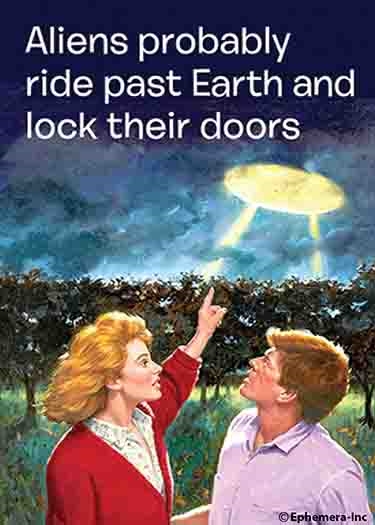
3-I think this picture could be more accurate than we would like to admit. We could be the ghetto neighborhood of the universe and while other life forms know we are here, they would rather we don’t know they are there. For their safety. They have seen what we can do, but they have also seen how we use our knowledge and they think that it is just better to not wake that sleeping dog for as long as possible.
4-Perhaps the reason why we have no contact with other and because others have not contacted us is because we really are alone and there are no other living creatures out there. With all the technical advancements we have had in the past 200 years alone, we are well on our way to finding ways to get out there in space and discover planets that are far far away from our solar system, and perhaps one day, our galaxy. If other planets have millions of years on us, and they still haven’t found us or communicated with us, maybe it is because they don’t exist.
I hope that the main thing you got from all of this is that Physics really is very interesting. It relates to all parts of life, whether it is your own life specifically, or life in the universe in general. Thanks for reading!
 Fun in Physics